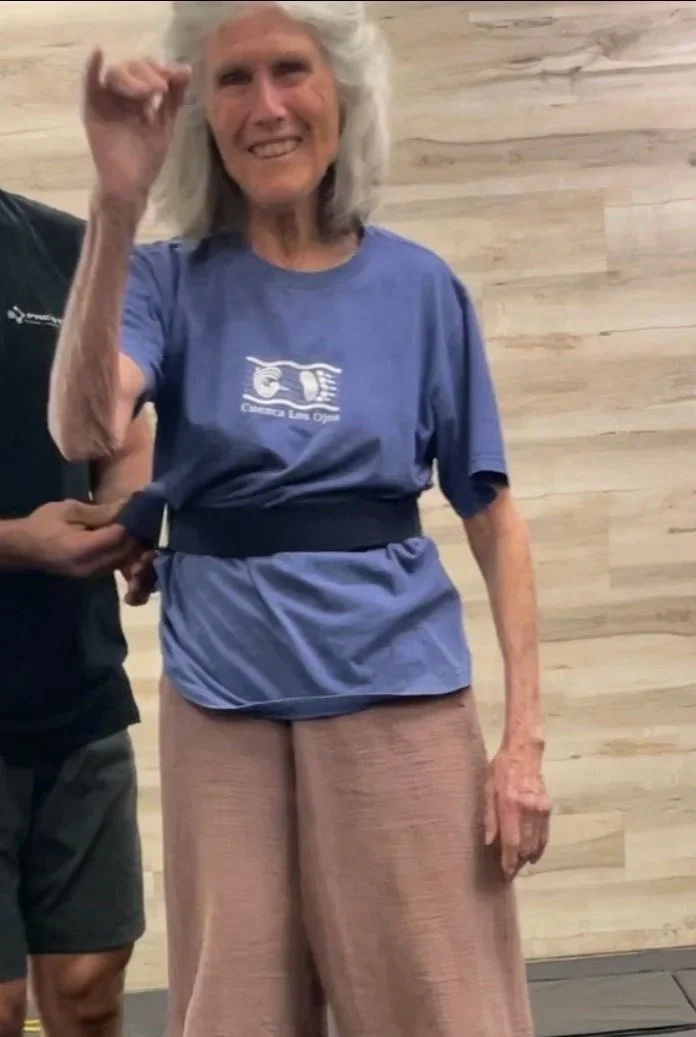
Functional Exercise
& Rehabilitation
1. Modified Organized Exercise
and
2. Active Lifestyle
Personal Training
-
“A fundamental upper-body pattern involving moving a load away from the body or pushing one's own body weight away”
-
“Bringing an object toward the body's center or pulling the body toward a fixed point, acting as a crucial counterpart to pushing.”
-
“Vertical pushing movement that involves driving a load from the shoulders to a locked-out position overhead.”
-
“Driven by contracting the glutes and quadriceps, pushing through the heels to return to a standing position.”
-
“Forward bending at the hips while maintaining a neutral spine, primarily engaging the posterior chain”
Assessment 1hr 30min
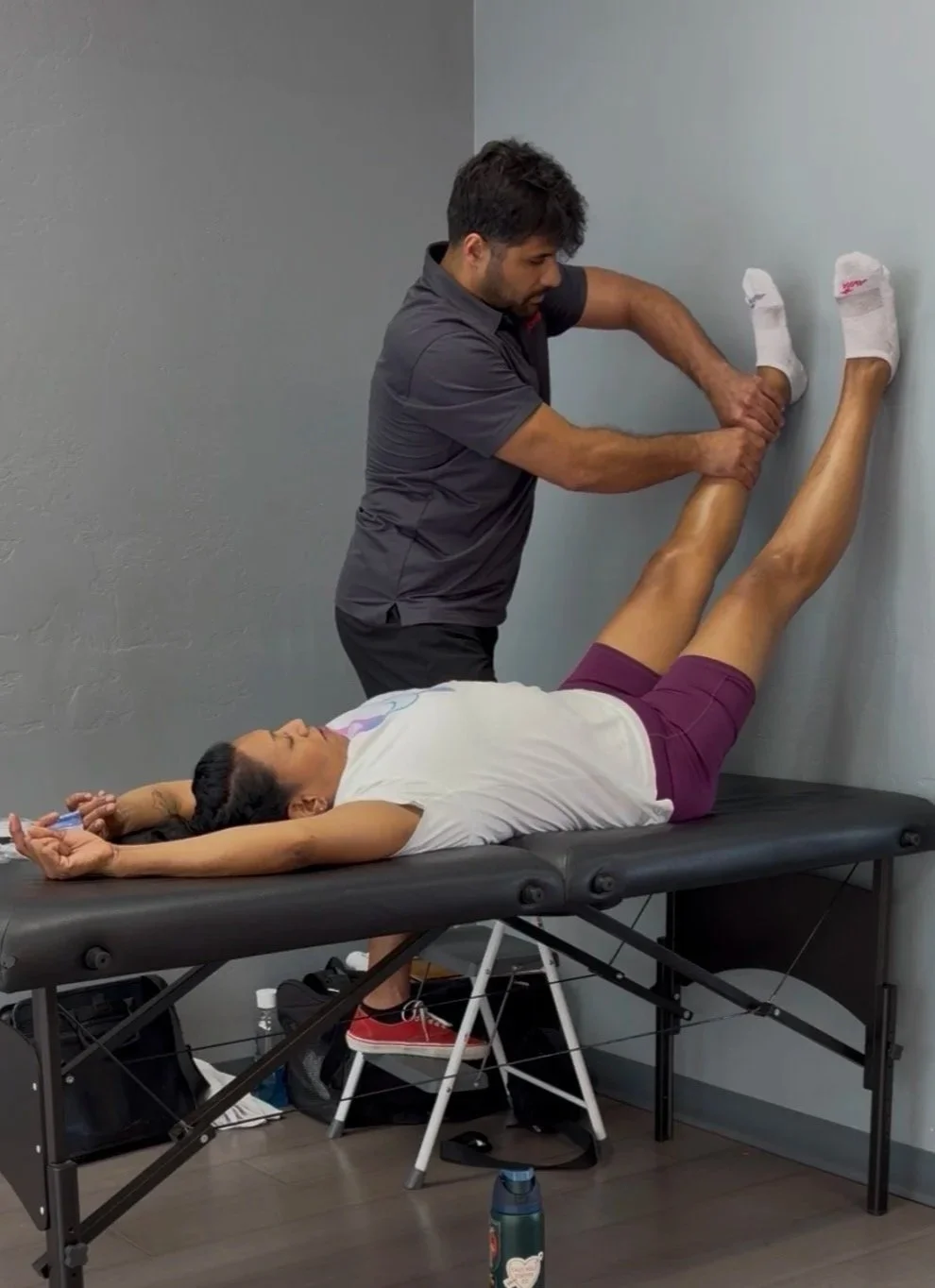
50 Min Assisted Stretch Bodywork
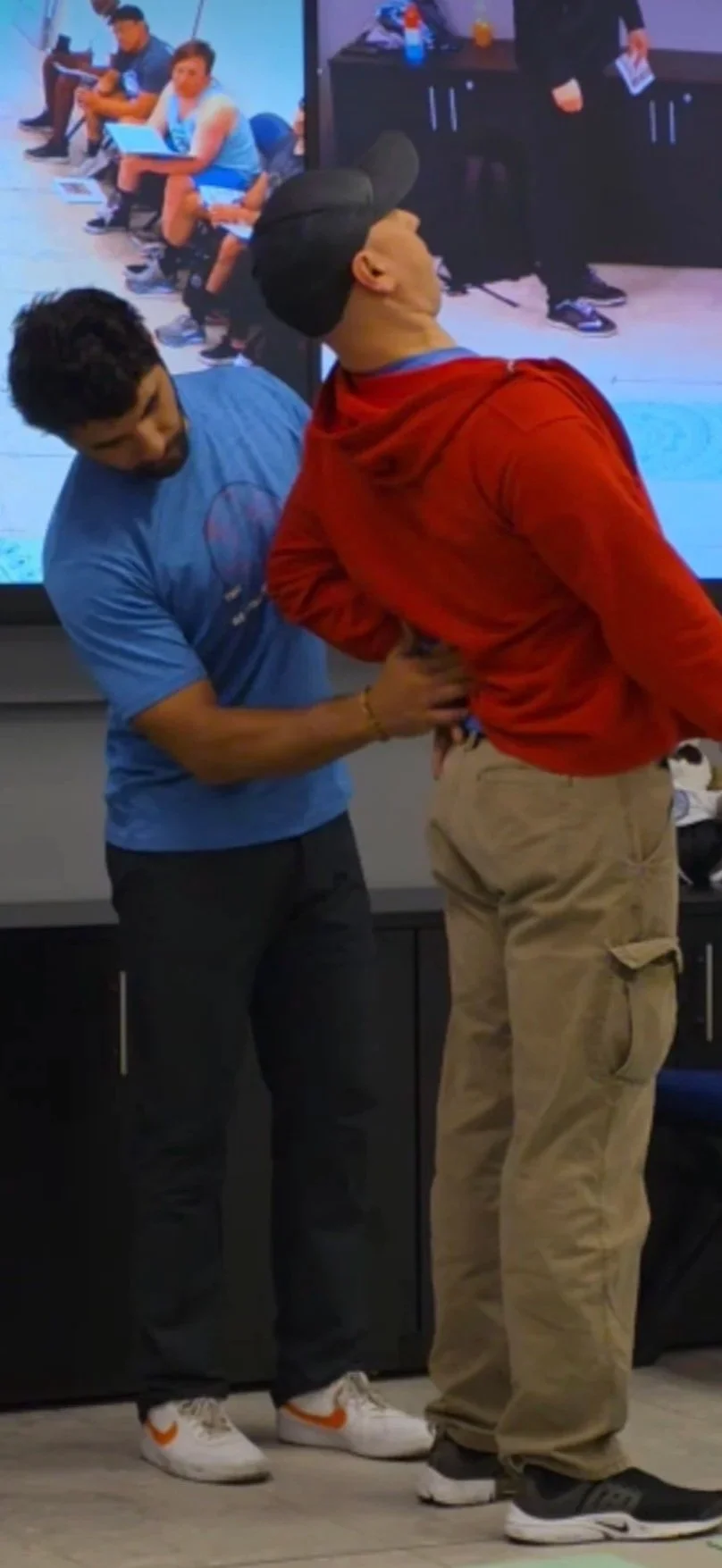
Conduct Appropriate Performative Assessments
Conduct Modifications for Largest Barriers of Exercise
Conduct Movement Assessments
Conduct Lower Body Muscle Tests
Conduct Core Muscle Tests
Assisted Stretching
-
“The normal extensibility of soft tissues that allows for full range of motion of a joint.” NASM Textbook (APA 7th Ed.)
-
“The ability of the circulatory and respiratory systems to provide the body with oxygen during activity.” NASM Textbook (APA 7th Ed.)
-
“The structures that make up the lumbo-pelvic-hip complex (LPHC), including the lumbar spine, pelvic girdle, abdomen, and hip joint.” NASM Textbook (APA 7th Ed.)
-
“Defined as the ability to maintain one’s center of gravity within that person’s base of support.” (Pollock et al., 2000)
-
“Increasing the capability to efficiently recruit muscle fibers and distribute oxygen and blood to the proper areas in the body.” NASM Textbook (APA 7th Ed.)
-
“Is a useful and effective method of fitness training that stimulates muscular, neurological, connective tissue, and even cardiovascular fitness adaptations” NASM Textbook (APA 7th Ed.)
-
“Exercises that generate quick, powerful movements involving an explosive concentric muscle contraction preceded by an eccentric muscle action.”NASM Textbook (APA 7th Ed.)
Primary Demographics
Conditions Worked With
Ankle Dysfunction
Breast Cancer Survivors
Cervical Fusions
Chronic Low Back Pain
Diabetes
Frozen Shoulder and Shoulder Impingement
Hypertension
Obesity
Osteoporosis
Pelvic Floor Deficits
Peripheral Neuropathy
Total Hip Replacement
Total Knee Replacement
Transverse Myelitis
Wheelchair and Assisted Walker Users
Questions?